Learn Squared recently released Architectural Storytelling, a new Session which shows how to communicate the personality of a character and world, purely through designing spaces.
We recently spoke to instructor Yury Ostapchuck about the beautiful artwork he created, his inspirations and the advice he’d give to students beginning to use his workflow.
Conveying Character Through Spaces
Learn Squared: You put a big focus on telling stories through your architectural designs. Tell us a little bit about how this concept of ‘architectural storytelling’ works.
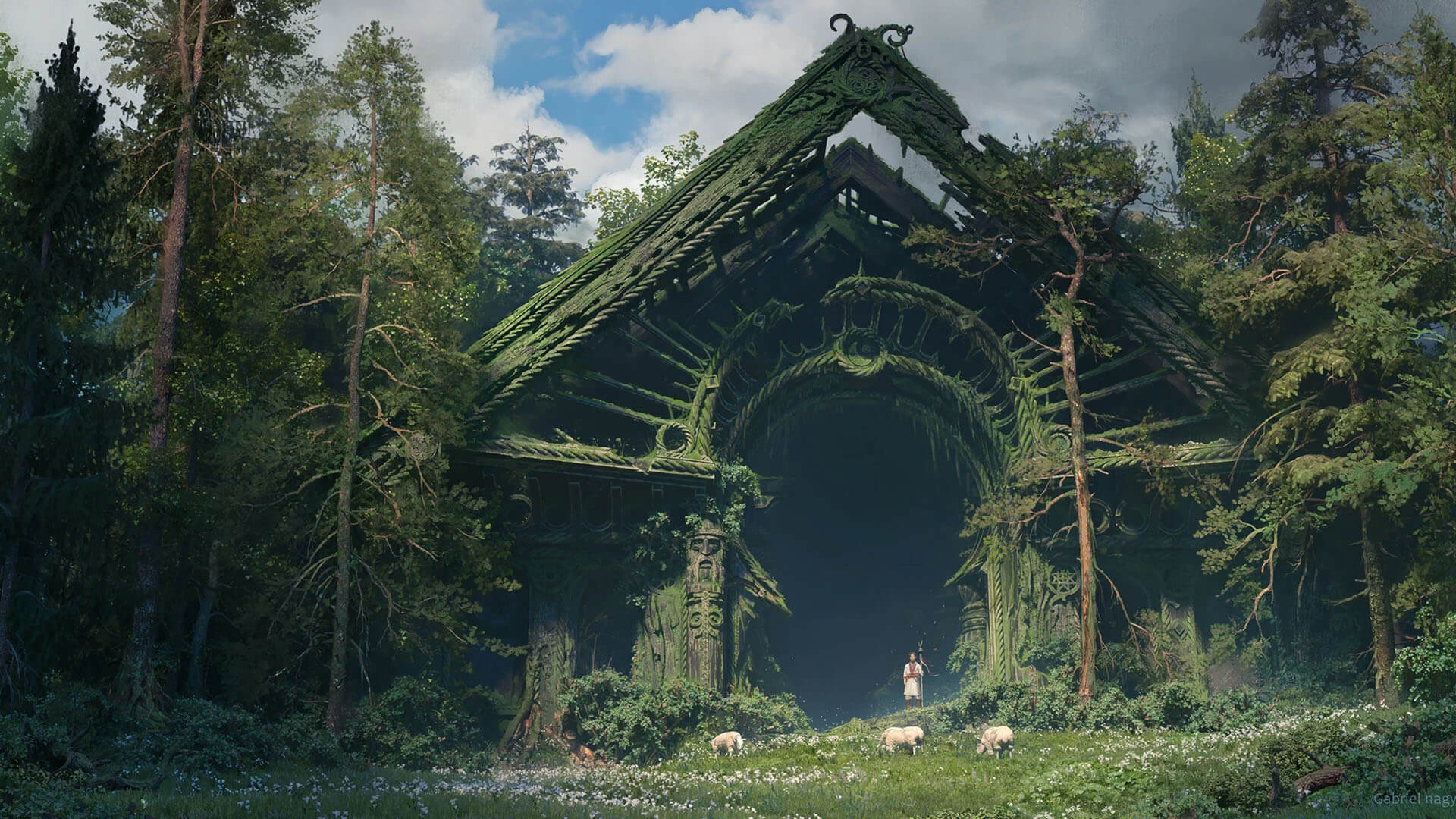
Yury Ostapchuck: To me spaces aren’t just a backdrop, they’re the stage where the story really happens. I think about architecture as a character with its own mood, history, and purpose, not just a shell. The way spaces show traces of life like worn edges, aging materials, circulation paths, the logic of how people enter, move, stay, or leave. The camera then highlights those relationships – scale, light, pathways – so the architecture becomes part of the plot, part of the story not just decoration.
With my background in games and film, I use architecture to suggest the story before the characters even appear, so the setting itself helps carry the narrative. Architecture and architectural spaces play a role in nearly every project, and failing to use them as a means of communicating with the audience and bringing the director’s vision to life would be a significant missed opportunity.

LS: Tell us about the space you designed for your Session, the hideout of the ‘Queen of the Night.’ Who is she, and what was needed for the location she inhabits?
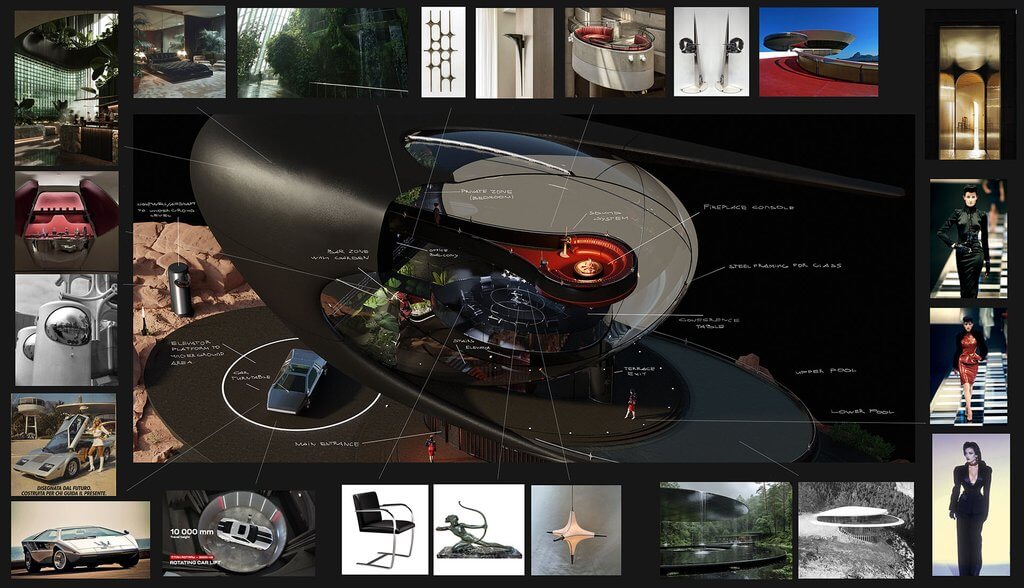
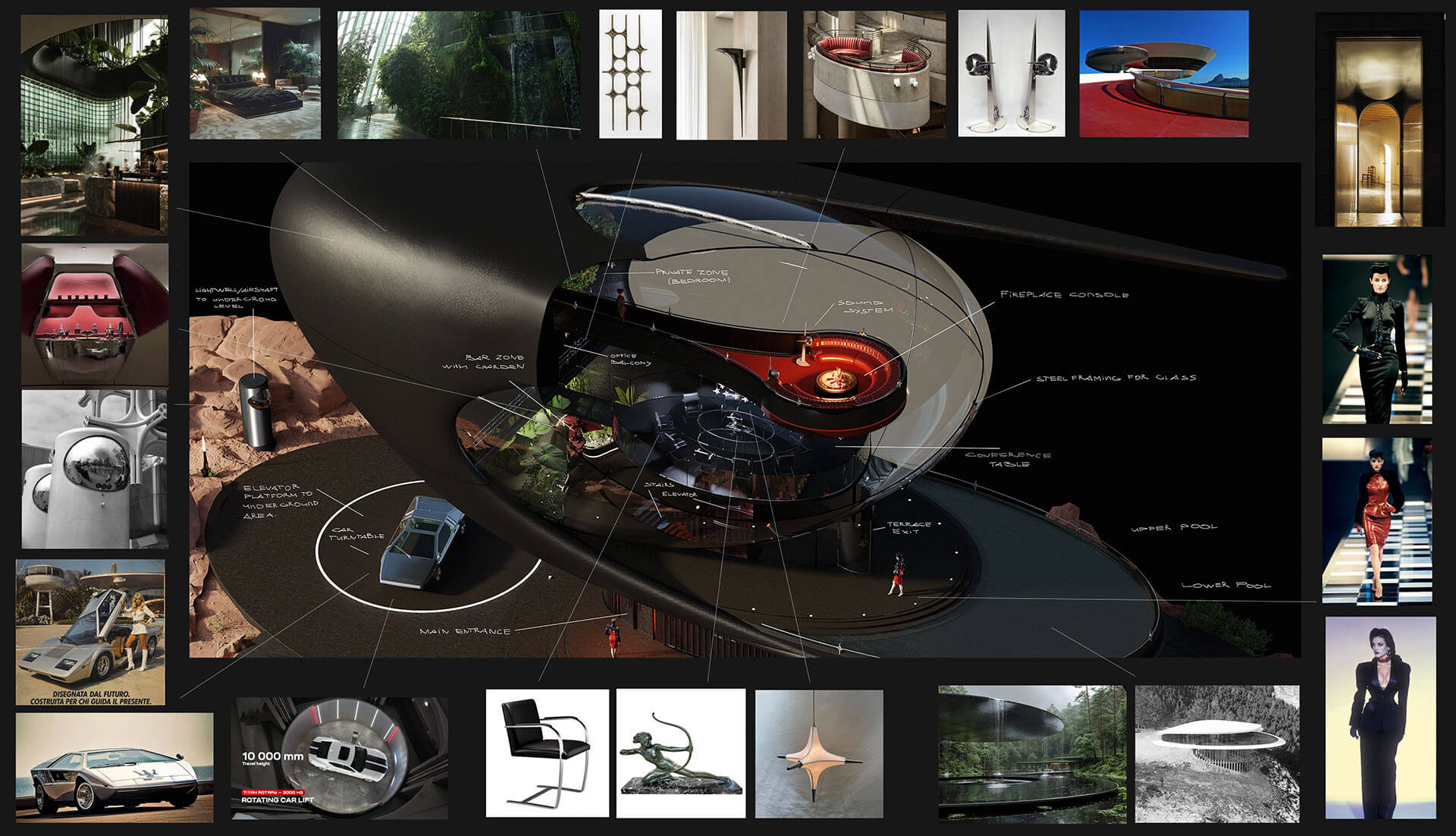
YO: For this Session, I focused on designing a spy villain’s hideout: the Queen of the Night. She’s imagined like a stylish 60’s or 70’s Cold War female villain character, a blend of elegance, technology, and danger.
My idea was to turn that character into a clear architectural language. The hideout becomes a stage that reflects her identity. Think sharp silhouettes, controlled lighting, views of the night sky, and materials that suggest secrecy and precision. The intention was to tell her story through the environment. As you step inside, the interior immediately evokes the period and begins to reveal her personality, providing subtle hints about who she is long before she enters the scene
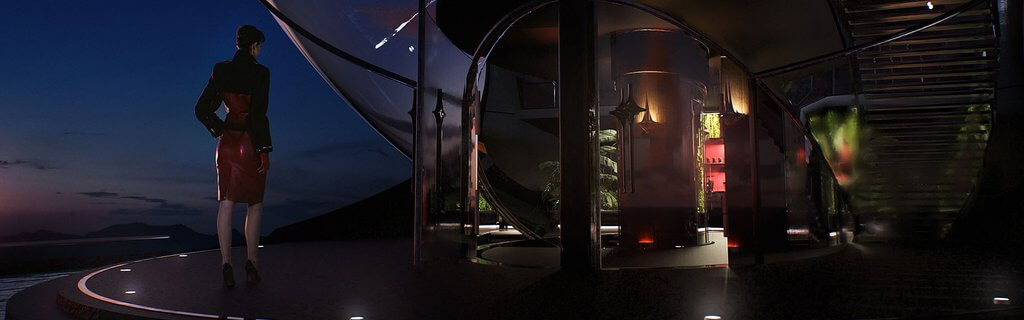
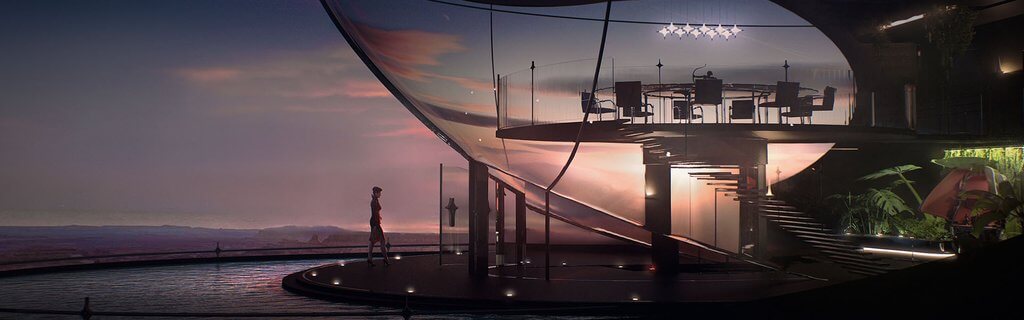
LS: For your Session, you created not just the one final image, but several different times of day and camera angles! How can showing multiple shots like this help to convey your design?
YO: Since the main focus of this Session is architectural storytelling, it’s important to show not just the design, but how it supports and communicates the story. In film, architecture is rarely shown from just one perspective, we might start with a wide establishing shot, then move into interiors that show how characters move through the space and interact with it.
For this project, I was especially interested in the relationship between the exterior architecture and the interior spaces. Details like furniture, materials, and lighting matter just as much as the architecture itself. They help reveal the character who lives there. I wanted the external form and the internal layout to feel connected, so that entering this place would feel like stepping into the world of the Queen of the Night.
There were actually many more ideas I wanted to develop, but with limited time, I focused on building a complete environment that hints at a much bigger world. And, if I’m honest, when you’re excited about a project, it’s hard to stop. You start designing a building, and before you know it, there’s a secret passage leading to an underground lab and maybe even a whole complex! But that’s also the fun part: discovering new possibilities and letting the world keep expanding.
Challenges and Inspirations
LS: What have been some of your biggest challenges on a project in the past? Was there a certain architectural design that required a lot of back-and-forth before you could get it where you wanted it?
YO: Every new project can bring something completely unexpected. One challenge I often face is designing larger and more complex architectural environments. Sometimes the task is not just to create a single building, but to design an entire city with unusual architecture, or a world where architecture has evolved in a completely different direction, with new technologies or architectural innovations.
These projects are particularly challenging because they require a lot of research, exploration, and design development. You’re no longer solving the design of one architectural object, you’re moving into the broader territory of worldbuilding.
I find this kind of work incredibly fascinating because it allows you to think on a much bigger scale. In fact, there’s probably enough material in this subject alone for an entirely separate Session on architectural worldbuilding!
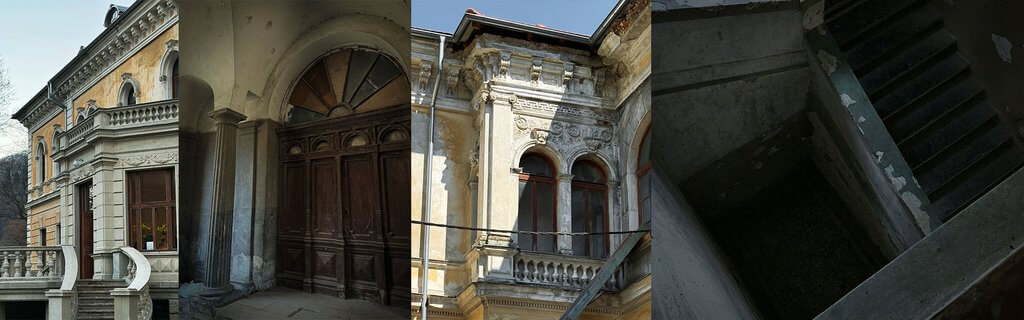
LS: What are some of your biggest influences when designing?
YO: Whenever I can, I try to visit real buildings, walk through them, notice the details like doors, windows, moldings, the materials, and how time leaves its marks. For example, this weekend I visited a partially restored palace in the mountains. It was mostly empty, with just a small café, and I asked if I could walk around a bit more. And I ended up exploring the space, looking at the old structures, the textures, and even small details people usually don’t notice.
[Experiences like that] are really valuable for me, because you see how spaces age, how light falls, and how history stays in them. And that helps me bring authenticity into my concepts.
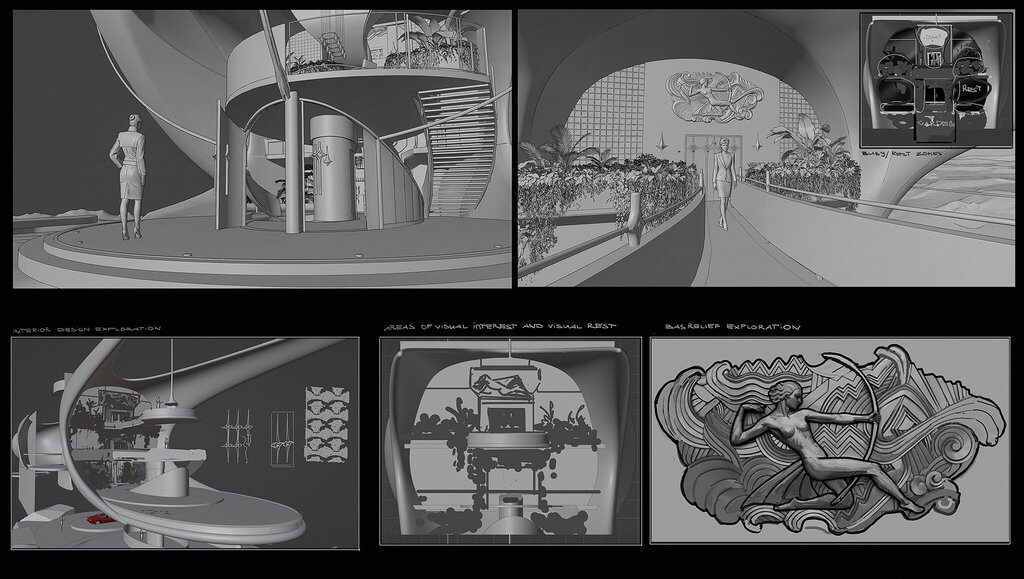
Advice for Students
LS: Architecture can be intimidating, especially when tackling interiors and exteriors together. What advice would you give to students who are preparing to take your Session?
YO: My advice to students is not to overcomplicate things at the start. Focus on simple choices, like whether a space is open or closed, bright or dark, small or large, old or new. Once those basic decisions support the story, details come much easier.
You don’t have to invent complex forms at first, just build a clear, functional space that serves the narrative, and then expand it step by step, imagine yourself entering the building a explore it. For example, in your own project, you can repeat a single shape or material across both interior and exterior, so the whole world feels connected, not like separate scenes.
Tell Your Own Stories
Thanks to Yury for talking with us, and congrats on creating this incredible training!
Students who want to begin telling their own architectural stories can find Architectural Storytelling on the Learn Squared site right now.
⭐️ Architectural Storytelling: https://www.learnsquared.com/courses/architectural-storytelling